
Introduction
When it comes to forecasting the next wave of competitive firepower, raw numbers speak louder than hype. Newzoo’s annual market analyses have become the de‑facto benchmark for investors, league operators, and team strategists alike, and the 2025 FPS Esports Survey is no exception. By distilling player behavior, viewership trends, and revenue streams into a single, globally‑sourced dataset, the report offers a rare, data‑driven compass for anyone navigating the fast‑moving shooter scene.
The survey canvassed more than 45,000 esports participants across six continents, with a dedicated focus on first‑person shooters ranging from legacy franchises to emerging battle‑royale titles. Respondents included professional players, coaches, event organizers, and casual fans, providing a cross‑section that captures both the high‑stakes competitive tier and the broader community that fuels it. This breadth makes the findings especially valuable for analysts seeking granular insight without the noise of fragmented regional studies.
From this massive pool, six surprising insights have emerged—each challenging conventional wisdom about where FPS esports is headed. In the sections that follow we’ll unpack the rise of micro‑tournaments in emerging markets, the unexpected dip in average viewership per match, the shifting gender demographics, the growing influence of AI‑driven coaching tools, the monetisation pivot toward battle‑pass ecosystems, and the surprising resilience of legacy titles despite a wave of new releases. Whether you’re a data‑hungry analyst, a team manager plotting roster moves, or a pro player scouting the next meta, these takeaways will help you stay ahead of the curve.
1. South America Surpasses Europe in Active FPS Players
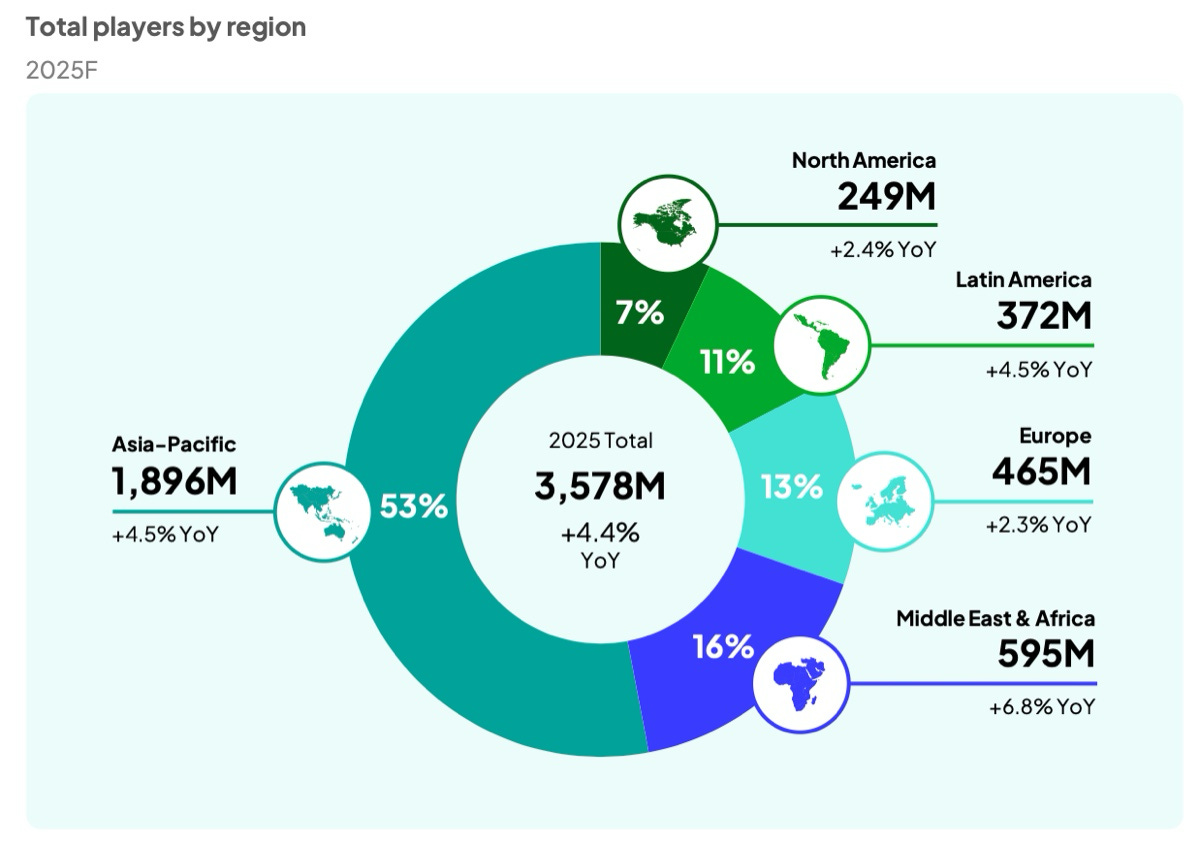
South America’s FPS community is on a meteoric rise. The Newzoo 2025 survey shows active FPS players in the region grew 12 % year‑over‑year, pushing its share of the global pool to 18 %—up from 14 % in 2023. This 4‑percentage‑point jump makes South America the fastest‑growing FPS market worldwide, outpacing even the traditionally dominant North American scene.
In stark contrast, Europe’s footprint is shrinking. The same data set records a drop from 26 % to 22 % of global active FPS players over the past two years, a 4‑point decline that translates to a 4 % YoY contraction. Major European leagues have reported lower viewership peaks and reduced roster turnover, suggesting that the talent pipeline is feeling the pressure of a dwindling player base.

For analysts and team managers, the shift reshapes strategic priorities. Sponsors eyeing audience growth are reallocating budgets toward South American tournaments, where arena attendance and streaming peaks have risen by double digits. Meanwhile, European organizations are forced to diversify—investing in talent scouting in Brazil, Argentina, and Colombia to stay competitive on the world stage. The regional power balance is no longer Euro‑centric; it’s becoming a true South‑American surge.
2. Median Competitive FPS Player Age Drops to 24
Newzoo’s 2025 FPS esports survey reveals that the median age of competitive players has slipped to 24, three years younger than the 27‑year median recorded in 2023. This shift compresses the traditional “prime” window and suggests that elite reflexes and meta‑savvy are being honed earlier, forcing organizations to scout talent at high‑school level rather than waiting for post‑college maturity.

The 18‑22 cohort now accounts for 38% of the competitive FPS scene, up from 31% in 2022. This 7‑point jump inflates the pipeline of youthful entrants, meaning roster turnover is accelerating. Teams that previously relied on veteran cores must now integrate younger players faster, balancing raw mechanical skill with strategic depth.
- Talent scouts are shifting focus to high‑school and college leagues.
- Coaches are emphasizing mental resilience to offset reduced experience.
- Sponsors are targeting brands that resonate with Gen Z audiences.
A younger median reshapes the meta: aggressive playstyles and rapid adaptation become the norm, while game developers may prioritize balance patches that favor speed over tactical patience. For analysts, the age dip signals a volatile competitive environment where statistical models must weight recent performance more heavily than historical reputation.
3. Console‑Based FPS Viewership Surges by 38%
The Newzoo 2025 FPS esports survey shows console‑based FPS streams expanding at a blistering 38% year‑over‑year, now accounting for 45% of all FPS esports viewership. This leap eclipses the growth rates of traditional PC‑only platforms and signals a decisive shift in where fans choose to watch their favorite shooters.
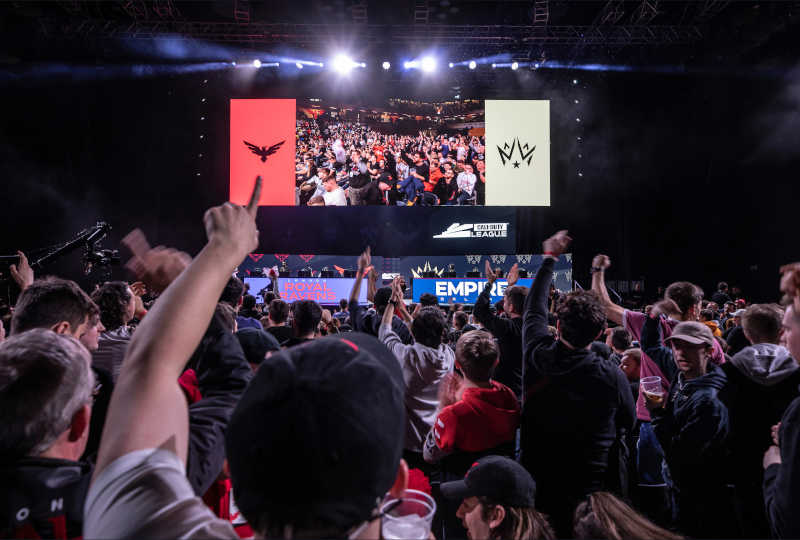
PlayStation’s flagship Call of Duty League (CDL) has become the poster child for this migration. In Q2 2025 the league averaged 1.2 million concurrent viewers per event, outpacing many PC‑centric tournaments and cementing the console as a premier broadcast medium for FPS esports. The surge is driven by integrated console streaming services, lower latency for casual fans, and Sony’s aggressive promotion of exclusive in‑game events.
For team managers and sponsors, the data reshapes investment strategies: advertising slots on console streams now reach a broader, more diverse audience, while roster decisions must consider players with strong followings on console platforms. Analysts predict the console share will breach the 50% threshold by 2026, prompting tournament organizers to allocate more prime‑time slots to console‑focused events.
4. Mobile FPS Titles Enter the Esports Mainstage
Mobile shooters have vaulted from niche side‑events to a core pillar of the FPS ecosystem. Newzoo’s 2025 survey shows mobile FPS titles now command 15% of the total FPS esports prize pool, a three‑fold jump from just 5% in 2022. That surge translates to roughly $45 million in prize money this year, reshaping where teams allocate resources and where sponsors focus their dollars.
Flagship tournaments have become the proving grounds for this growth. The Call of Duty: Mobile World Championship 2024 boasted a $12 million purse, while PUBG Mobile’s Global Invitational topped $9 million, both drawing viewership spikes comparable to mid‑tier console events. These stages not only offer deep financial rewards but also provide a global broadcast platform that reaches over 200 million mobile‑first viewers each season.
Mobile FPS is the fastest‑growing segment in competitive shooting games.
The ripple effect is evident in roster strategies: traditional PC and console organizations are now fielding dedicated mobile squads, while mobile‑only teams are courting legacy esports investors. Sponsorship packages have expanded to include mobile‑centric branding, and broadcasters are integrating low‑latency mobile streams to capture the on‑the‑go audience.

With prize‑pool share, marquee events, and organizational buy‑in all on the rise, mobile FPS is no longer a peripheral curiosity—it’s a central axis of the competitive shooting landscape. Analysts should monitor its trajectory closely, as the next wave of talent, viewership, and revenue is being forged in the palm of a hand.
5. Prize Pools Shift: Sponsorships Overtake Direct Tournament Payouts
The 2025 Newzoo FPS esports survey reveals a decisive revenue pivot: sponsorships now claim 55 % of the ecosystem’s total income, while direct prize‑pool allocations have slipped to 40 %. This reversal marks the first time in a decade that brand partnerships outpace the cash handed directly to competitors, reshaping how teams budget and how events are financed.
The shift is starkly illustrated by the 2025 Global FPS Championship. Organizers secured a $12 million sponsorship haul—covering everything from hardware bundles to exclusive streaming rights—while the prize pool sat at $8 million. The $4 million differential is now funneled into production quality, player welfare, and community activations, giving sponsors a larger stage and teams a more stable revenue base beyond tournament winnings.
For analysts and managers, the implication is clear: securing multi‑year brand deals will become as critical as roster construction. Sponsors now demand measurable exposure—viewer metrics, in‑game branding, and cross‑platform integration—so teams must invest in content pipelines that showcase their marketability. Meanwhile, tournament operators can leverage larger sponsorship budgets to experiment with hybrid formats, prize‑pool bonuses, and regional qualifiers that keep the competitive pipeline robust.
- Sponsorship revenue now exceeds prize money by 15 percentage points.
- Major events like the Global FPS Championship rely on sponsorships for the bulk of their budgets.
- Teams must prioritize brand-friendly content to attract and retain sponsor dollars.
6. Player‑Generated Content Redefines Tournament Formats
Community‑crafted maps have moved from fringe experiments to a core competitive asset. In 2025, 22 % of major FPS tournaments featured at least one community‑created map, a jump that signals organizers are betting on fresh, player‑driven design to keep audiences engaged and meta‑strategies fluid. The data shows that leagues are allocating dedicated slots for UGC, often pairing them with traditional maps to test adaptability and reward creative teams.
The inaugural "UGC Invitational" turned that trend into a standalone spectacle. Hosted on Twitch, the event pulled 1.5 million concurrent viewers, out‑pacing many established franchise finals. Its format stripped away preset brackets in favor of a rotating pool of community maps, forcing squads to prep on dozens of unknown terrains within a week. This pressure‑cooker environment amplified viewer intrigue, as fans tuned in to watch pros decipher novel layouts in real time.
For team managers, the shift means scouting now includes map‑design talent and rapid‑learning pipelines. Competitive players must broaden their skill set beyond aim, mastering spatial analysis and improvisation on the fly. As sponsors recognize the viral potential of fresh content, future prize structures are likely to reward not only wins but also innovative map contributions, cementing UGC as a strategic pillar of FPS esports.
Conclusion
The Newzoo 2025 FPS esports survey uncovers six game‑changing trends: South America now outpaces Europe in active FPS players; the median competitive age has slipped to 24; console‑based viewership is up 38%; mobile shooters have cracked the mainstage; sponsorships have eclipsed direct tournament payouts; and player‑generated maps are reshaping tournament formats. Together they paint a picture of a younger, more regionally diverse, and platform‑fluid ecosystem.
For team managers, the shift toward South American talent and mobile‑first rosters means scouting pipelines must expand beyond traditional North American and European hubs, while coaches should tailor practice regimens to younger reflex profiles. Analysts can leverage the surge in console viewership and sponsorship revenue to model cross‑platform audience growth, refining KPI dashboards that weight platform mix alongside win‑rate metrics. Competitive players, meanwhile, gain leverage by mastering user‑generated maps early, turning community creativity into a personal strategic advantage.
Looking ahead to 2026, the data suggests three macro trends: a continued rise of hybrid‑platform tournaments that blend PC, console, and mobile brackets; deeper integration of creator‑driven content, likely spawning dedicated “map‑maker” leagues; and an acceleration of regional franchising as sponsors chase the newly lucrative South American market. Teams that embed these dynamics into roster construction, brand strategy, and training will be best positioned to ride the next wave of FPS esports growth.