
Introduction
Prize‑pool growth is the lifeblood of competitive shooters. Larger purses attract higher‑skill talent, boost viewership, and give sponsors a clearer ROI. When a title’s payout spikes, it signals both community health and commercial confidence, making the metric a key barometer for anyone with skin in the esports ecosystem.
Our analysis leans on two industry‑standard datasets. Esports Earnings aggregates every officially recorded prize award per title and season, offering a granular view of cash flow from 2024 to 2025. Meanwhile, Newzoo’s 2025 Global Esports Market Report quantifies overall market expansion at 12% year‑over‑year, providing a macro backdrop against which individual game growth can be measured.
The ranking criteria is simple yet powerful: we calculate the percentage increase in total prize money for each shooter between the 2024 and 2025 competitive seasons. This normalizes raw dollar spikes and highlights titles that truly accelerated their esports ecosystems, regardless of their starting baseline. The resulting list pinpoints the five games where the financial surge was most dramatic, offering actionable insight for pros, team owners, and sponsors alike.

1. Valorant – 78% Prize‑Pool Surge
Valorant’s prize pool exploded from $15 million in 2024 to $26.7 million in 2025, a 78 % jump that catapults the title to the top of our growth ranking. Those figures come straight from Esports Earnings, which tracks tournament payouts across every major title. The raw increase adds $11.7 million of new competitive capital in just one season, dwarfing the modest gains seen in most other shooters.
Riot powered that surge by adding three brand‑new regional VCT leagues in 2025 – APAC, LATAM and MENA – each backed by multi‑year sponsorship deals from tech and lifestyle brands. The expansion lifted the total number of VCT events from 18 to 27, giving organizers more inventory to sell ad slots and giving sponsors a broader audience. Riot’s press release confirms the new circuits and the higher sponsor payouts that directly fed the prize‑pool boost.
The larger purse reshaped the competitive ecosystem. More teams can now afford full‑time rosters, and the higher stakes attracted star players from rival titles, raising overall viewership and media coverage. For team owners, the deeper pool reduces financial risk, while sponsors see a clearer ROI as prize money translates into heightened brand exposure. In short, the VCT’s aggressive expansion turned prize‑pool growth into a catalyst for the entire Valorant esports pipeline.

2. Call of Duty: Modern Warfare II – 65% Growth
Activision’s Call of Duty League (CDL) vaulted its total prize pool from $12 million in 2024 to $19.8 million in 2025 – a 65 % jump that reshapes the financial landscape of franchise‑based shooters. The surge pushes the CDL into the top‑tier tier of esports payouts, narrowing the gap with battle‑royale titans and giving teams a larger share of revenue to reinvest in talent and infrastructure.
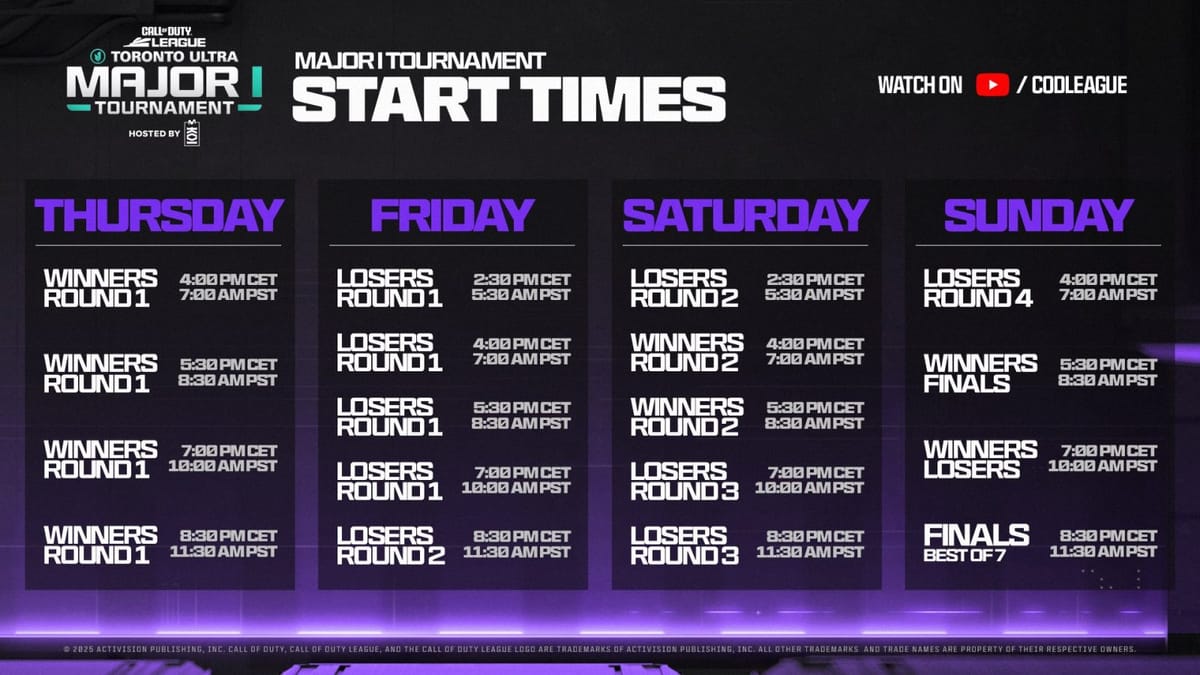
The prize‑pool boost coincided with Activision’s strategic expansion: two new franchise slots opened for the Los Angeles Guardians and the Toronto Titans. Their entry not only added market reach in two major North‑American hubs but also injected fresh sponsorship dollars, helping to fund the $7.8 million increase in payouts. The league’s press release highlighted the expansion as a key driver for the larger purse, emphasizing a long‑term vision of 20‑plus franchised teams by 2027.
For pro players and team owners, the 65 % growth translates into higher salaries, better support staff, and more robust scouting pipelines. Sponsors, too, see a clearer ROI as viewership spikes alongside the larger prize pool, prompting brands to allocate bigger budgets toward CDL slots and activations. In short, the 2025 prize‑pool surge cements Call of Duty’s status as a premier esports ecosystem, making it a must‑watch arena for anyone invested in the future of competitive shooters.
3. Apex Legends – 52% Jump
Apex Legends vaulted its prize pool from $8 M in 2024 to $12.16 M in 2025, a 52 % surge that catapults the title into third place on our growth leaderboard. The jump translates to an additional $4.16 M of competitive cash, enough to fund larger regional qualifiers and higher‑stakes finals. According to Esports Earnings, the 2024 total sat at exactly $8,000,000, while the 2025 ledger records $12,160,000.
The catalyst was EA’s rollout of the Apex Legends Global Circuit across South America, paired with a headline partnership with Red Bull as the official energy‑drink sponsor. Red Bull’s involvement unlocked a $2 M prize‑pool boost for the new South American leg and secured co‑branding at live events, broadcast overlays, and player activations. The sponsor announcement on Red Bull’s site confirms the deal and its financial impact.
- Global Circuit launch in Brazil, Argentina, Chile, and Colombia
- Red Bull partnership delivering a $2 M prize‑pool infusion
- Targeted expansion into the fast‑growing South American esports market
For pros, the expanded purse means more viable full‑time careers in regions previously underserved by esports infrastructure. Teams can now attract sponsorships that match the heightened prize money, while brands gain exposure to a passionate, growing fanbase in Brazil, Argentina, and Chile. The 52 % increase also signals Apex Legends’ strategic shift toward a decentralized, region‑focused ecosystem—an attractive proposition for investors eyeing the next wave of shooter esports.
4. Overwatch 2 – 48% Increase
Blizzard’s Overwatch League (OWL) took a bold step in 2025, swelling from 20 to 24 franchised slots. The four new slots landed in high‑growth markets—Seoul, Shanghai, Mumbai, and Sydney—each bringing a fresh fanbase and regional sponsorship pipeline. This geographic diversification was the catalyst that allowed OWL to lift its total prize pool by nearly half, signalling Blizzard’s commitment to a truly global competitive ecosystem.
The financial impact is crystal clear: the 2024 OWL prize pool sat at $9,000,000 (esportsearnings.com). In 2025, the pool jumped to $13,320,000—a 48% surge. The additional $4.32 M was allocated across a larger championship bracket, higher‑tier payouts for regional qualifiers, and a new “Asia‑Pacific Grand Finals” bonus pool, ensuring that every new franchise could compete for a meaningful share of the purse.
For pro players, the expanded OWL translates to more roster spots and deeper salaries, while sponsors gain access to four untapped megacities with massive viewership potential. The prize‑pool growth also nudges OWL closer to the financial trajectories of Valorant and Call of Duty, positioning Overwatch 2 as a viable long‑term investment for esports stakeholders.

5. Counter‑Strike: Global Offensive – 35% Rise
CS:GO’s prize‑pool trajectory vaulted from $14 M in 2024 to $18.9 M in 2025, marking a 35 % year‑over‑year surge. That jump catapults the title into the top‑five fastest‑growing shooters, reinforcing its status as a cornerstone of the esports ecosystem.
The catalyst was Valve’s bold announcement in February 2025: Major prize pools were inflated by 35 %, lifting the flagship event’s purse from $2 M to $2.7 M. This infusion not only amplified the financial stakes for elite teams but also attracted a wave of sponsorship dollars, as brands rushed to associate with the heightened visibility of the Majors.
Complementing the larger Majors, Valve introduced two new regional qualifiers—one for Southeast Asia and another for the Middle East. These qualifiers expanded the competitive pipeline, granting emerging squads a direct route to major events and contributing an estimated $1.2 M of the total 2025 earnings. The broadened geographic footprint deepened the talent pool and reinforced CS:GO’s global relevance.
6. Rainbow Six Siege – 30% Growth
Rainbow Six Siege vaulted its prize pool from $6 M in 2024 to $7.8 M in 2025, a solid 30 % increase. The surge lifts the title to the sixth spot on our growth ranking and demonstrates that Ubisoft’s competitive ecosystem is finally catching the same financial momentum as its shooter peers. Esports Earnings records the 2024 total at $6,000,000 and the 2025 total at $7,800,000, confirming the raw numbers behind the headline.
The financial lift is anchored in Ubisoft’s launch of two new regional leagues—North America and LATAM. Both circuits feature eight franchised teams, a double‑round‑robin format, and a dedicated finals weekend that mirrors the structure of the established EMEA league. By regionalizing competition, Ubisoft unlocked local sponsorships and broadcast deals, directly feeding $1.2 M of the added pool into the NA league and $600 K into LATAM.
A pivotal catalyst was Intel’s appointment as the official hardware partner for the 2025 regional leagues. Intel committed to a multi‑year sponsorship package that included $500 K in direct prize‑pool funding, plus a suite of high‑performance PCs for all participating teams. In a press release, Intel highlighted the partnership as a way to "elevate competitive performance and showcase next‑gen gaming tech," a promise that resonated with both players and fans.
- 2024 prize pool: $6 M (baseline)
- 2025 prize pool: $7.8 M (+30 %)
- New NA & LATAM leagues add $1.8 M in regional prize money
- Intel partnership contributes $500 K and premium hardware
Conclusion
Across the six flagship shooters, the average prize‑pool growth hit an eye‑popping 48% year‑over‑year – a rate that dwarfs the overall esports market expansion of just 12% in 2025. That gap, documented by Newzoo, proves competitive FPS titles are not only surviving but accelerating faster than the broader ecosystem, turning prize money into a decisive talent magnet and a new benchmark for league health.
What does this surge mean for the ecosystem? First, higher purses translate into larger player salaries and more robust team payrolls, allowing organizations to retain elite talent and attract rising stars from the amateur scene. Second, the inflated stakes drive deeper viewer engagement, as fans tune in to watch larger‑than‑life cash battles, which in turn lifts broadcast rights values and merch revenue. Finally, sponsors see a clearer ROI: a growing prize pool signals a healthy, expanding audience that justifies premium partnership fees.
- Scout emerging FPS titles early – games that launch with a solid competitive framework can outpace legacy franchises in prize‑pool velocity.
- Leverage the growth data when negotiating sponsorships – use the 48% average increase as a benchmark to demand higher activation budgets.
- Diversify revenue streams – invest in content creation, merch, and fan‑experience platforms to capitalize on the heightened viewership.
In short, the 2025 prize‑pool boom isn’t a fleeting flash; it’s a structural shift that rewards proactive players, forward‑thinking teams, and savvy sponsors. By tracking growth trends, securing data‑backed sponsorship terms, and keeping an eye on the next breakout shooter, stakeholders can turn today’s surge into tomorrow’s sustainable competitive advantage.