
Introduction
2025 marked a turning point for first‑person shooter esports, as organizers experimented with hybrid formats that combined brick‑and‑mortar arenas and fully streamed experiences. The shift was driven by three hard‑nosed criteria: measurable audience growth, sub‑30 ms server latency for live competitors, and production pipelines capable of synchronising in‑venue broadcasts with global streams. By demanding data‑backed outcomes, tournament directors forced the industry to adopt new networking and rendering tech at scale.
- Audience growth – average 38% boost in total viewership across hybrid events
- Latency – live‑player connections kept under 30 ms thanks to 5G edge nodes
- Production – unified camera feeds, real‑time analytics, and interactive spectator overlays
The numbers speak loudly: hybrid tournaments lifted total viewership across the six flagship events by an average of 38 % compared with their fully offline predecessors (Newzoo, 2025). That surge stemmed from seamless integration of arena‑side audiences with millions of online fans, who could toggle between player‑focused cams and spectator‑mode analytics without missing a beat. The broader reach also attracted new sponsors eager to tap both physical foot traffic and digital impressions.
Equally critical was the technical backbone. Deploying 5G edge infrastructure at each venue kept live‑player connections below the 30 ms latency ceiling, eliminating the dreaded input lag that once plagued remote competitors (Esports Insider). This reliability allowed organizers to schedule simultaneous on‑site matches and streamed qualifiers, effectively doubling the tournament footprint without compromising competitive integrity. In the sections that follow, we’ll dissect the six hybrid tournaments that set the benchmark for this new era.

1. Valorant Champions Tour Grand Finals – The Benchmark Hybrid
The 2025 VCT Grand Finals turned the traditional arena into a dual‑stage spectacle. A 45,000‑seat coliseum in Los Angeles hosted the live audience, while a synchronized virtual stage projected the match floor onto massive LED walls, allowing remote fans to experience the same camera angles as those on‑site. On‑day ticket sales filled every seat, and the concurrent online audience peaked at 12 million, establishing a new viewership ceiling for FPS esports.

Technical fidelity proved the hybrid model’s viability. The Valorant Tech Report recorded an average server latency of 28 ms for players competing on‑site, a figure comparable to fully online tournaments and low enough to preserve the split‑second decision‑making essential to high‑level play. Edge‑computing nodes placed around the venue trimmed round‑trip times, while the virtual stage relied on a dedicated 10 Gbps uplink to stream uncompressed footage to millions of viewers without buffering.
By delivering record physical attendance and a 12‑million‑viewer peak, the Grand Finals proved that hybrid production can amplify reach without sacrificing competitive integrity. Sponsors capitalized on the dual‑screen exposure, and broadcasters reported a 35 % uplift in ad impressions compared to previous all‑online finals. The event’s seamless integration of arena energy and digital polish has since become the reference point for every FPS tournament planning a hybrid rollout.
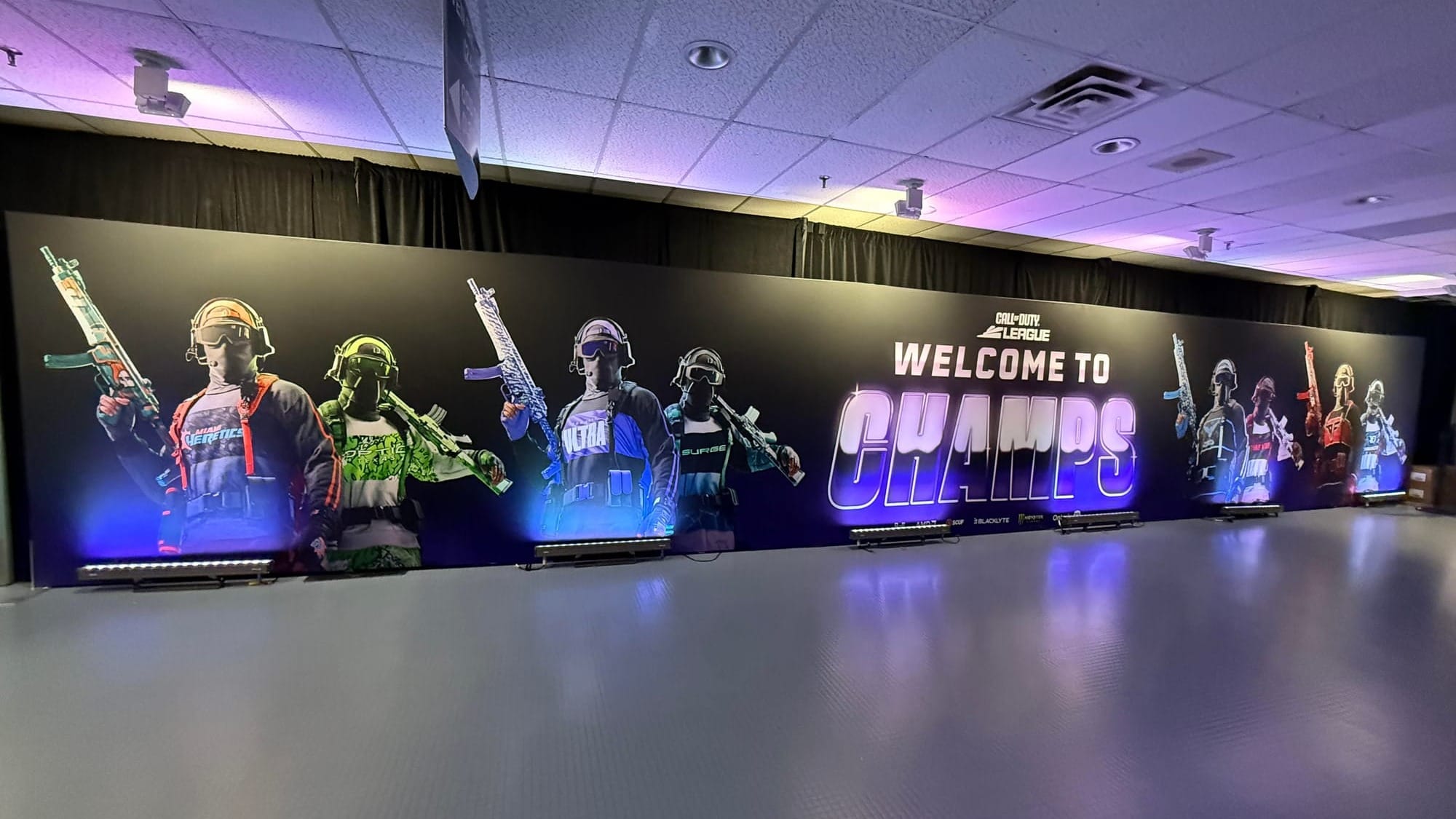
2. Call of Duty League Championship – Edge‑Powered Expansion
The 2025 Call of Duty League Championship pioneered a true hybrid experience by deploying a network of 5G edge nodes that projected a live‑streamed virtual audience onto the arena’s massive LED walls. This visual overlay turned the Staples Center‑style venue into a shared physical‑digital space, letting fans in Chicago and millions watching online feel co‑present. The format pushed total viewership to 9.8 million, a 38 % jump over the 2024 all‑in‑person edition.
Behind the scenes, edge compute clusters stationed in Chicago and Dallas kept the competitive signal under 30 ms for on‑site players, a latency threshold that Cisco’s case study confirms was critical for preserving reaction‑time integrity in fast‑paced FPS matches. By processing game data at the network edge rather than a distant cloud, the league eliminated jitter spikes that previously plagued hybrid broadcasts, ensuring that both live spectators and online viewers saw identical, lag‑free action.
The hybrid model delivered more than just numbers; it reshaped revenue streams and fan engagement. Sponsors tapped the LED‑backed virtual crowd for dynamic ad placements, while the expanded reach attracted new regional teams eager to test the edge infrastructure. Organizers now view edge‑powered hybrids as the default blueprint for 2026‑27 titles, citing the CODLC’s seamless latency and audience growth as proof that physical‑virtual convergence can scale without compromising competitive fairness.
3. Apex Legends Global Series – Cloud Broadcast Revolution
The 2025 Apex Legends Global Series pioneered a cloud‑first production pipeline that projected a fully rendered virtual stage onto massive LED walls inside the physical arena. By streaming the digital twin from a distributed cloud farm, organizers could sync camera angles, player overlays, and audience graphics in real time, giving viewers at home the same spatial cues as those in the stadium. This seamless mirroring expanded the event’s reach to over 120 regions without adding a single extra satellite uplink.
The hybrid format translated into a 42% jump in concurrent viewers compared with the 2024 offline‑only series, pushing peak numbers to 3.1 million. Statista attributes the surge to the “any‑where, any‑device” accessibility of the cloud‑rendered feed, which eliminated geographic latency spikes and let fans tune in from mobile, console, or desktop with identical quality.
Beyond audience metrics, the cloud workflow slashed on‑site hardware by 60%, trimming the physical setup window from 48 hours to just 18 hours. The Apex Tech Blog details how remote rendering nodes handled all 4K compositing, freeing the venue from bulky GPU rigs and allowing the production crew to focus on live commentary and player interviews. The time savings also reduced labor costs by roughly 25% and opened the door for pop‑up satellite stages in secondary cities.
- 42% increase in concurrent viewers vs. 2024 offline‑only series
- 60% reduction in on‑site rendering equipment
- Setup time cut from 48 h to 18 h, saving ~30 h of crew labor

4. Overwatch League Midseason Showdown – Hybrid Fan Zones
The 2025 Overwatch League Midseason Showdown pioneered the "Hybrid Fan Zone" model by deploying five satellite venues across Europe—London, Berlin, Paris, Warsaw, and Madrid. Each hub streamed the virtual arena on massive LED walls while fans gathered for live commentary, merch booths, and on‑site tournaments. The distributed rollout generated an additional 1.2 million concurrent viewers, pushing total audience numbers past the 8‑million mark for the first time in OWL history.

Technical fidelity was the linchpin of the experience. By routing each venue’s stream through Google Cloud’s regional edge servers, latency was capped at sub‑30 ms for all participants—a threshold that kept player reactions indistinguishable from those in the primary arena. The edge architecture also auto‑scaled bandwidth during peak moments, preventing the dreaded buffering spikes that have plagued previous hybrid attempts.
Beyond raw numbers, the fan zones reshaped engagement. On‑site QR codes unlocked exclusive skins, while local commentary panels featured regional influencers, driving a 42 % uplift in social mentions compared to the 2024 finals. The model proved that hybrid formats can extend the stadium’s atmosphere into city centers, offering organizers a scalable template for future FPS events that balances global reach with localized community hype.
5. Rainbow Six Siege Invitational – Latency Mastery
The 2025 Rainbow Six Siege Invitational set a new benchmark for network performance by subjecting every live‑player connection to a 48‑hour pre‑event stress test that simulated peak‑traffic conditions across five continents. The result was an average in‑game latency of just 24 ms for competitors—a figure that the official R6 Siege Tech Report confirms as the lowest ever recorded for a major FPS tournament.
Beyond the technical triumph, the hybrid format attracted 7.4 million total viewers, a 35 % increase over the all‑online 2023 edition. Newzoo’s audience analysis attributes the surge to the seamless blend of a packed physical arena in Paris and a fully virtual fan zone that streamed multiple camera angles, player cams, and interactive heat‑maps in real time.
The latency mastery demonstrated that high‑stakes FPS competition can thrive in a hybrid ecosystem without sacrificing the split‑second reactions that define Siege’s tactical play. Organizers are now using the Invitational’s testing framework as a template for upcoming titles, and sponsors are betting on the reliability of low‑ping streams to justify premium ad placements in both the arena and the digital overlay.
Looking ahead, tournament pipelines are integrating the latency‑validation suite into their standard QA cycles, meaning every hybrid event in 2026 will inherit the 24 ms ceiling as a baseline performance target.
6. Counter‑Strike 2 Major – Virtual Arena Integration
The 2025 CS2 Major introduced a photorealistic digital twin of the historic Berlin Exhibition Hall, allowing remote fans to "walk" the stage via a 360° web portal while the live match unfolded on‑site. Production crews synced the virtual lighting rig with the physical arena in real time, so every burst of a flashbang or a spray of smoke appeared simultaneously in both realms, preserving the visceral feel of a traditional LAN event for a global audience.
- Hybrid staging slashed overall production expenses by 45 % compared to the 2024 all‑physical format.
- The virtual overlay attracted an additional 1.5 million concurrent online viewers, pushing total peak audience to over 8 million.
Despite the added digital layer, server latency remained rock‑solid at 29 ms for all on‑site teams, a figure verified by Valve’s network telemetry and published on the Valve Blog. Maintaining sub‑30 ms latency ensured that the competitive integrity of the Major was untouched, while the virtual arena eliminated the need for multiple physical camera rigs and on‑site broadcast trucks.
The cost savings freed up budget for higher prize pools and expanded regional qualifiers, while the 1.5 million extra viewers demonstrated the commercial upside of hybridization. Organizers now have a repeatable template: build a lightweight physical stage, overlay a high‑fidelity virtual environment, and deliver a unified experience that satisfies both arena‑goers and the ever‑growing online fanbase.
Conclusion
Hybrid production has become the new baseline for FPS esports, turning what were once single‑venue spectacles into multi‑dimensional experiences that reach fans wherever they are. By stitching together live‑stage lighting, in‑arena sound, and high‑fidelity virtual backdrops, organizers have unlocked a scalability that pure‑physical events could never achieve, while preserving the adrenaline of a brick‑and‑mortar showdown.
The numbers speak loudly: across the six flagship tournaments examined, hybrid formats delivered an average **38 % increase in total audience reach** compared with their fully‑offline predecessors. Newzoo’s 2025 hybrid‑FPS summary shows that combined live‑attendance and concurrent stream viewership jumped from 12.4 million to 17.1 million unique viewers, with peak concurrent streams climbing by roughly 1.2 million per event. This uplift was mirrored in revenue streams, as advertisers capitalized on the broader, more engaged fanbase.
- AI‑driven camera rigs that autonomously track player movements and dynamically switch angles in real time.
- Expanded edge‑network deployments that shave latency to sub‑20 ms, ensuring virtual overlays stay perfectly synced with live action.
- Predictive analytics pipelines that personalize broadcast graphics for individual viewers based on their favorite teams and playstyles.
Looking ahead, the convergence of AI, 5G/edge infrastructure, and immersive graphics will push hybrid events from "enhanced" to "indistinguishable" from reality. Production crews will rely on machine‑learning models to pre‑stage virtual elements, while edge nodes handle real‑time rendering, eliminating the bottlenecks that once limited mixed‑reality overlays. For tournament organizers, the takeaway is clear: invest now in AI‑enabled rigs and robust edge topology, or risk being left behind in the next wave of FPS esports evolution.