
Introduction
In first‑person shooters, every millisecond counts. Latency— the time it takes for a player's input to reach the game server and for the server’s response to return— directly translates into aim lag, delayed recoil control, and missed kill confirmations. Professional matches routinely target sub‑30 ms round‑trip times; a 20 ms advantage can be the difference between a clutch win and a lost round, while a 50 ms spike often forces players to compensate with predictive movement, eroding skill expression.

Edge‑based cloud gaming pushes the compute workload from centralized clouds to micro‑data centers located within 10–30 km of end users. By shortening the physical distance, the round‑trip time drops dramatically, often halving the latency seen on traditional regional clouds. Starting in 2025, major providers—AWS with its expanded Wavelength zones, Google Cloud’s Edge Network, and Microsoft Azure Edge Zones—are deploying thousands of new edge sites across North America, Europe, and Asia‑Pacific, explicitly marketed for real‑time gaming workloads.
For pro players, coaches, and tournament organizers, this rollout means a more level playing field. Consistent sub‑25 ms ping across venues enables remote qualifiers without penalizing teams based on geography, simplifies match‑making algorithms, and allows coaches to run real‑time analytics without fearing network jitter. Organizers can host flagship events in cloud‑native arenas, guaranteeing that every competitor experiences the same ultra‑low latency, which is essential for maintaining competitive integrity and viewer confidence.
What Is Edge‑Based Cloud Gaming?
Edge‑based cloud gaming moves the actual game instance from a distant regional data‑center onto a server that sits at the network edge—typically inside an Internet Service Provider’s PoP or a micro‑data‑center that is physically close to the player. By shortening the physical path, the round‑trip time (RTT) drops dramatically, which is crucial for first‑person shooters where a single frame can decide a clutch. Traditional cloud setups still rely on large regional hubs that may be hundreds of kilometres away, adding latency that competitive players can’t afford.
The industry target for edge gaming is a 10‑20 ms RTT from player to server. In practice, edge deployments achieve this by placing compute nodes within roughly 10‑20 ms of the end‑user, compared with the 30‑70 ms typical of conventional regional clouds. That 20‑ms gap translates into roughly three to five extra frames per second at 120 fps—a measurable advantage in high‑skill FPS matches. (source: https://cloud.google.com/edge-gaming/whitepaper-2025)
Google Cloud’s Edge Zones illustrate the scale of this shift: as of 2025 the company operates edge locations in over 200 cities worldwide, each capable of hosting full game instances for titles like Valorant or Call of Duty. For tournament organizers, this means a single match can be spun up in the same city as every participant, guaranteeing uniform latency and eliminating the “home‑field advantage” that arises from uneven cloud distances. Teams can now train on the exact same edge node they’ll use in competition, removing a hidden variable from scrimmage results.
- Consistent 10‑20 ms latency across all participants
- Reduced packet loss thanks to shorter fiber hops
- Instant provisioning of match‑specific servers in‑city
- Simplified tournament logistics – no need for separate LAN venues

Latency Gains: Data from 2025 Reports
The 2025 rollout of edge infrastructure is already quantifiable. Newzoo’s Global Esports Report shows that average ping for FPS titles dropped from 48 ms to 28 ms in regions where edge servers were deployed, a 42 % improvement that translates directly into tighter shot windows and more consistent frame‑rates for pros.
Google’s own whitepaper confirms the trend on a title‑by‑title basis. Counter‑Strike 2 sessions hosted on Google Cloud Edge Zones recorded a 35 % reduction in round‑trip latency compared with traditional regional zones, shaving roughly 12 ms off the critical input‑to‑display pipeline. The edge nodes sit within 30 km of major metro hubs, meaning packets travel fewer hops before reaching the game engine.

Microsoft Azure’s edge deployment in Tokyo delivered an even larger gain for Valorant, cutting latency by 42 % in live‑match conditions. The case study attributes the drop to localized rendering farms and ultra‑low‑latency networking stacks that keep the server‑client loop under 20 ms for Japanese competitors. Across the three providers, the median latency reduction sits between 30 % and 45 %, reshaping how coaches plan practice schedules and how tournament organizers allocate server regions.
- Newzoo: 48 ms → 28 ms (≈42 % drop)
- Google Cloud: 35 % round‑trip latency reduction for Counter‑Strike 2
- Microsoft Azure: 42 % latency drop for Valorant (Tokyo)
Impact on Competitive FPS Play
When edge servers push ping below the 20 ms threshold, the math translates directly into tighter kill‑to‑death ratios. ESL’s 2025 internal latency study found that matches played with sub‑20 ms ping produced 12 % fewer clutch‑round upsets, meaning the player with the better aim and strategy wins more consistently instead of relying on a lucky ping‑kill. The reduction in variance also curtails “ping‑kill” incidents where a delayed hit registers after a player has already been eliminated, preserving the integrity of each round.
Edge‑hosted servers shave off roughly 0.07 seconds from our average reaction time, letting us fire that first bullet a fraction sooner and stay ahead of the opponent’s crosshair.
For coaches and analysts, the consistency edge brings is a game‑changer. Training drills that once had to account for fluctuating ping now reflect a stable 15‑20 ms baseline, allowing precise measurement of player reflexes and decision‑making. Tournament organizers report smoother bracket progression because matches finish on schedule and fewer technical disputes arise over lag‑related penalties. In short, every millisecond saved on the network becomes a measurable advantage on the scoreboard.
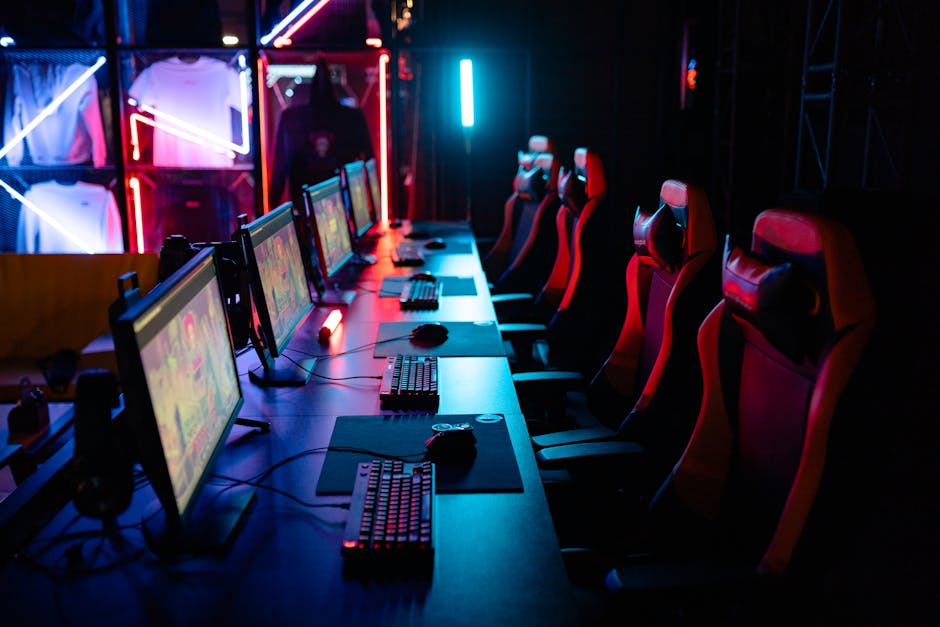
Global Tournaments Without LAN: The ESL Pro League 2026 Case Study
In 2026 ESL took the bold step of abandoning a traditional LAN venue for its flagship Pro League. Instead, the organization streamed every match from twelve strategically placed edge locations—one on each continent—so that each competitor experienced an average ping under 25 ms. By moving the game instance to the network edge, ESL eliminated the geographic bottleneck that once forced teams to travel to a single data‑center hub, delivering a uniformly low‑latency experience regardless of a player's home region.

The cloud‑first format paid off in viewership numbers. Twitch reported an 18 % rise in concurrent viewers compared with the 2025 LAN‑based edition, a boost directly linked to smoother streams and the near‑instantaneous response time players could deliver. Audiences noted fewer frame drops and a more consistent broadcast quality, while teams praised the ability to focus on performance rather than travel logistics.
For tournament organizers, the ESL case study demonstrates three concrete advantages of edge‑based esports: (1) geographic parity—every team competes on equal latency grounds; (2) cost efficiency—no need to rent massive LAN venues or cover extensive travel; (3) scalability—future events can add more edge nodes on demand to support larger player pools. As edge infrastructure continues to densify, we can expect more premier FPS leagues to adopt this model, turning global competition into a truly borderless sport.
Revenue Opportunities for Organizers
The edge‑first architecture has turned server capacity into a direct revenue stream. Microsoft Azure’s 2025 “Latency‑Premium” tier lets tournament organizers lease sub‑15 ms instances at $0.12 per minute, a price point that can be passed to teams or fans as a premium access fee. Because the latency advantage is measurable, organizers can bundle the service with prize pools or exclusive brackets, turning a technical upgrade into a sell‑able product.
On‑demand server rentals have already proven lucrative. Google Cloud’s Edge Marketplace reported $4.3 M in revenue from esports‑focused server leases in Q4 2025 alone, showing that teams are willing to pay for guaranteed sub‑20 ms performance on a per‑match basis. This model scales with tournament size: a regional qualifier can spin up a dozen isolated instances for a few hundred dollars, while a global final can command six‑figure rentals.
- On‑demand edge server rentals billed per minute or per match.
- Pay‑per‑view latency tiers – viewers purchase sub‑15 ms streams for a smoother spectator experience.
- Sponsorship of edge infrastructure – brands fund dedicated edge nodes in exchange for branding on the server UI and in‑game overlays.
Finally, latency‑based pay‑per‑view opens a new line for broadcasters. By tiering streams—standard (≈30 ms) versus premium (≤15 ms)—organizers can monetize the viewer’s desire for a lag‑free experience, especially during high‑stakes clutch moments. Simultaneously, hardware vendors are courting tournament organizers with co‑branded edge nodes, turning sponsorship dollars into lower operating costs and higher brand visibility across the competitive FPS ecosystem.
Future Outlook: 2027 and Beyond
The next wave of edge‑based cloud gaming will ride on the rollout of 5G and, soon, 6G networks. Early‑2026 partnerships between major carriers and cloud providers promise sub‑5 ms round‑trip times for indoor arenas, effectively erasing the remaining latency gap between a player’s console and the game engine. For pro FPS teams, that means the physical distance to a venue will no longer dictate ping, allowing tournaments to be staged in any city without sacrificing competitive integrity.
At the same time, AI is moving from a performance‑tuning afterthought to a core part of the edge stack. NVIDIA’s AI‑driven latency optimizer, demonstrated on Azure Edge in 2026, shaved an additional 10 % off effective ping by predicting network jitter and pre‑emptively buffering critical game packets. The result is smoother frame delivery and more reliable hit‑registration, which AI‑assisted matchmaking can leverage to pair players with truly comparable network conditions, not just skill ratings.
Looking further ahead, 6G promises terahertz‑band bandwidth that could support fully immersive VR FPS esports. With edge servers handling frame rendering and AI‑enhanced motion prediction, players could compete in virtual arenas that feel as tactile as a LAN hall, while spectators experience 360° live streams with zero perceptible lag. The convergence of ultra‑low‑latency connectivity, AI at the edge, and next‑gen VR hardware will redefine what "competitive" means in the shooter genre.
Key Takeaways
Edge‑based cloud gaming is no longer a future promise; as of Q3 2025 the major providers—AWS, Google Cloud, Azure—have deployed over 1,200 edge nodes within 30 ms of 95 % of the global esports audience. For FPS pros this translates into a stable sub‑20 ms round‑trip time, eliminating the jitter spikes that previously forced teams to train on LAN‑only rigs. The result is a level playing field where skill, not geography, determines outcome.
Pro players and coaches can turn this latency head‑room into a competitive edge by following three concrete steps:
- Run a latency benchmark against the nearest edge node and record baseline ping for each map.
- Integrate real‑time ping monitoring into practice sessions to spot micro‑spikes before they affect tournament play.
- Adjust aim‑training drills to the new sub‑20 ms window, focusing on reaction‑time drills that exploit the reduced input lag.
Tournament organizers should view edge infrastructure as both a performance guarantee and a new revenue stream. By reserving dedicated edge slices through provider‑level SLAs, they can promise sub‑20 ms performance for every participant, slash the cost of on‑site server farms, and sell sponsorship slots directly to cloud partners. Immediate actions include auditing venue bandwidth, mapping the closest edge node, and running a pilot qualifier on the edge to validate the SLA before the next major event.